
Composite bearings.
Our lubrication-free composite bearings offer several advantages across various industries. These bearings eliminate the need for external lubrication, reducing maintenance costs and time. Since they don’t require oil or grease, they are environmentally friendly and avoid contamination risks, making them ideal for food processing, medical, and cleanroom applications.
Our composite materials are resistant to wear, corrosion, and extreme temperatures, enhancing the bearings’ durability and performance in harsh environments. Additionally, they reduce friction and noise, improving operational efficiency and equipment lifespan. Overall, lubrication-free composite bearings provide a cost-effective, low-maintenance solution for many mechanical systems.
iglidur® plain bearings
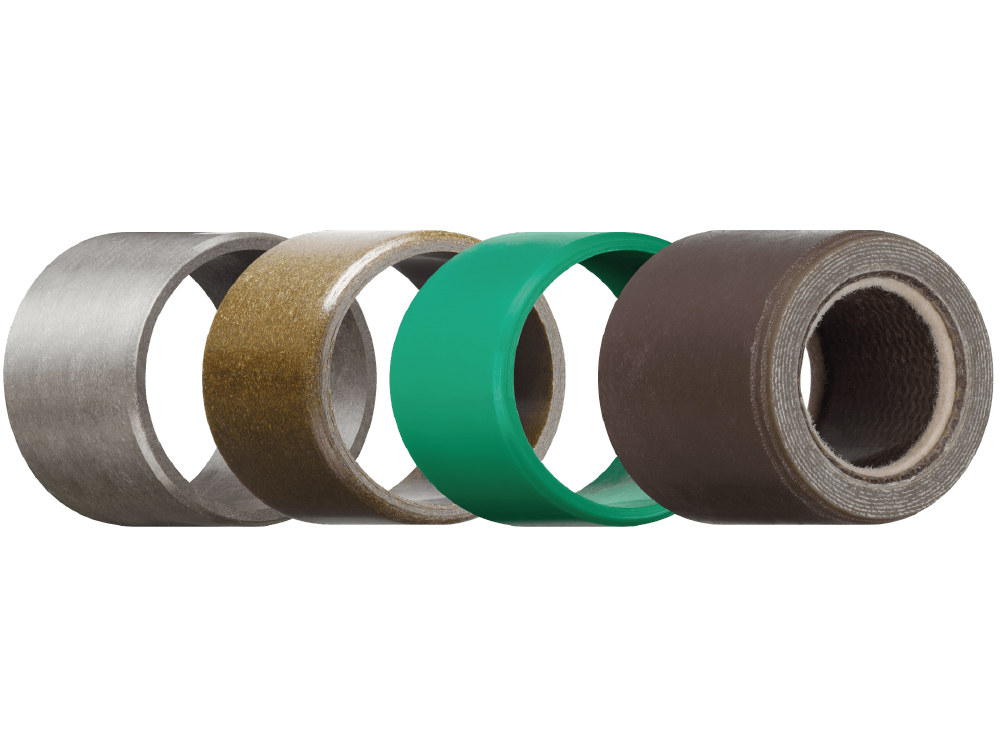
Sleeve bearings
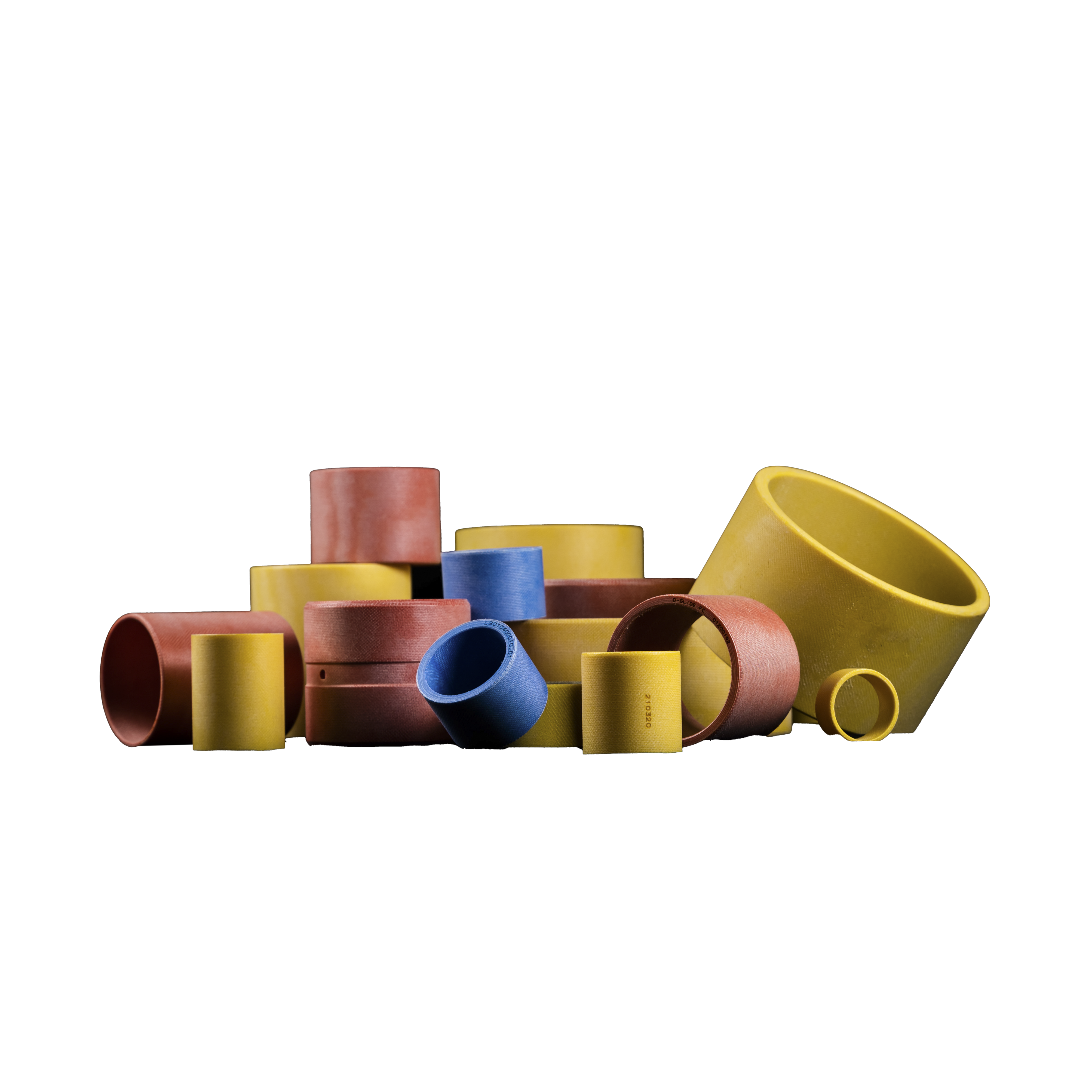
Sleeve bearings made from high performance, self-lubricating plastic.
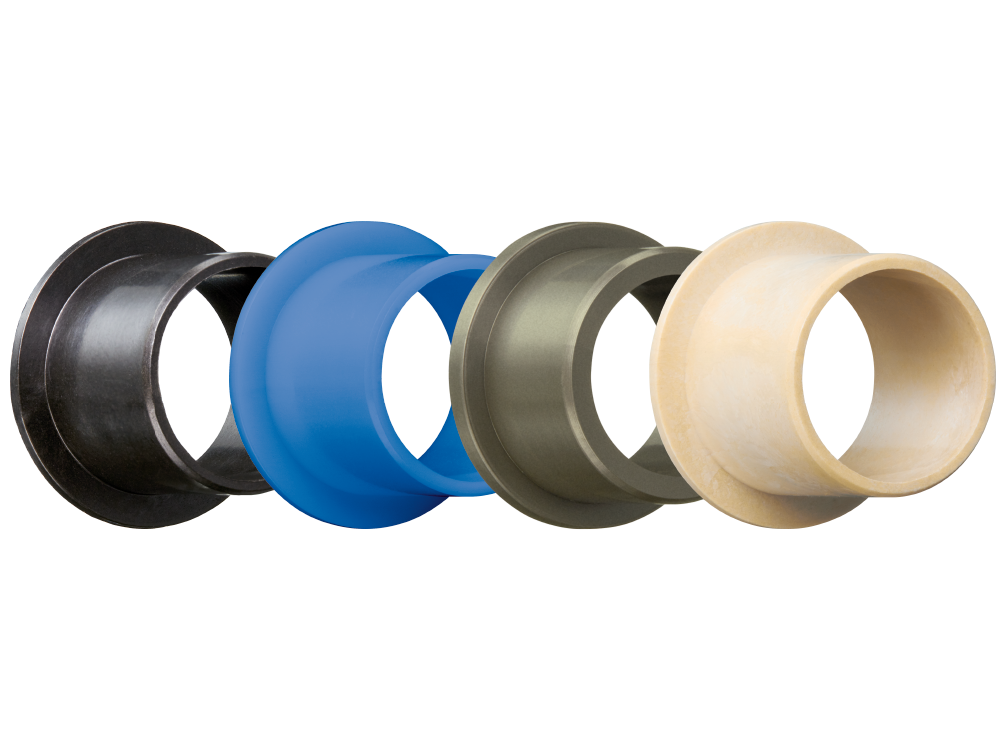
Flange bearings
Sleeve bearings with flange made from high performance, self-lubricating plastic.
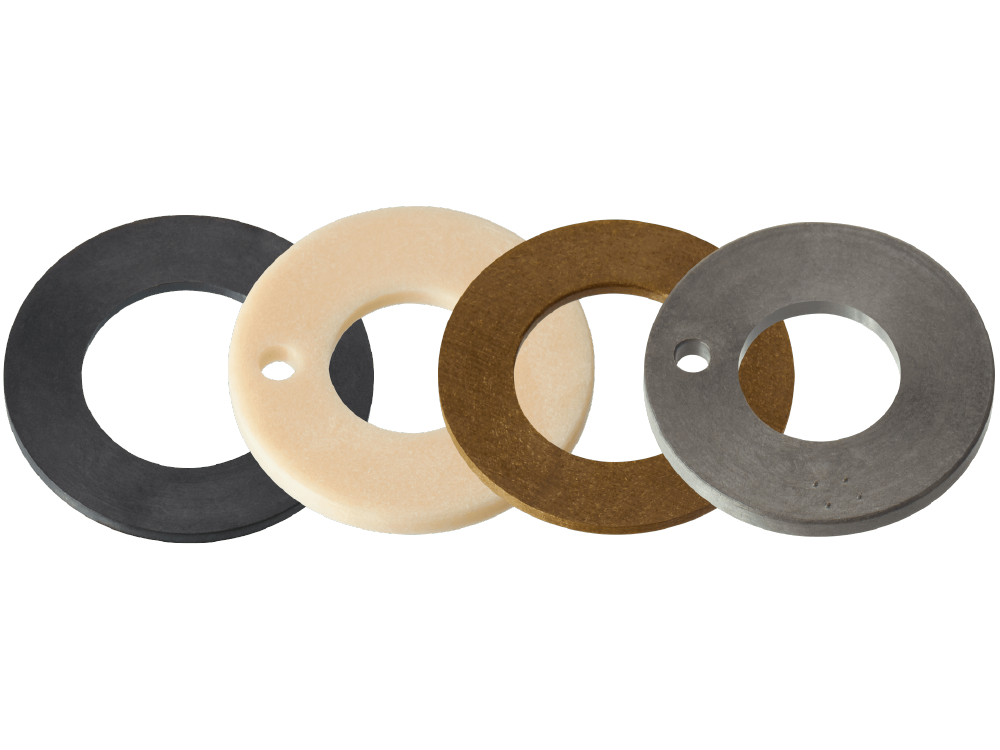
Thrust washers
Thrust washers in a variety of dimensions, made from high performance plastic.
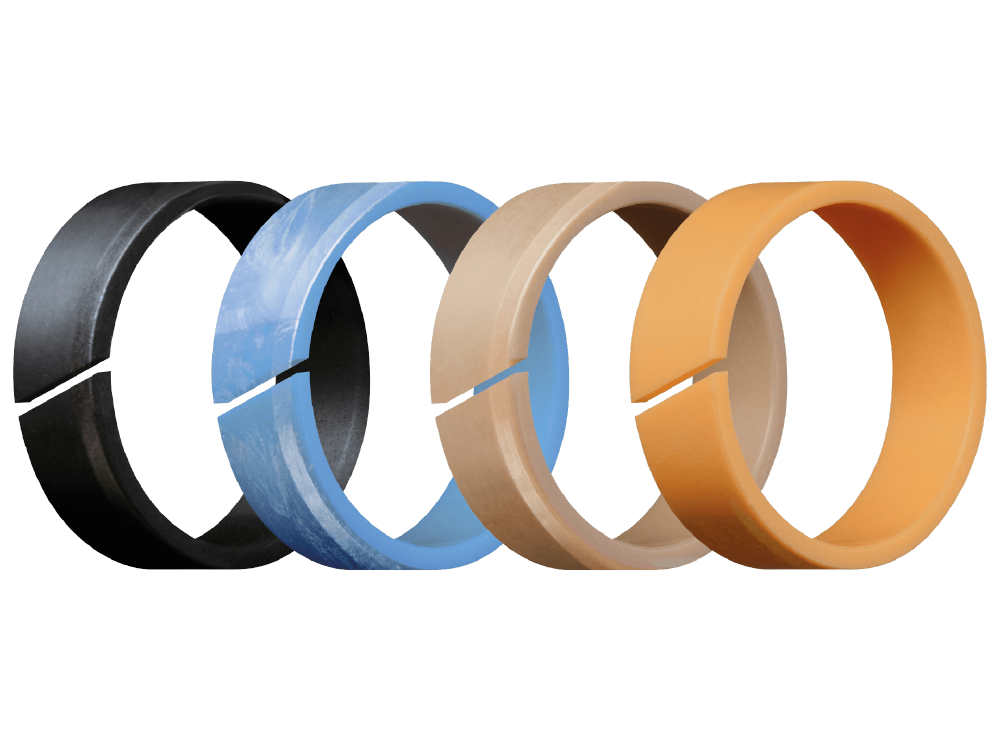
Guide rings
Guide rings replace PTFE tapes with only one clip-on guide ring.
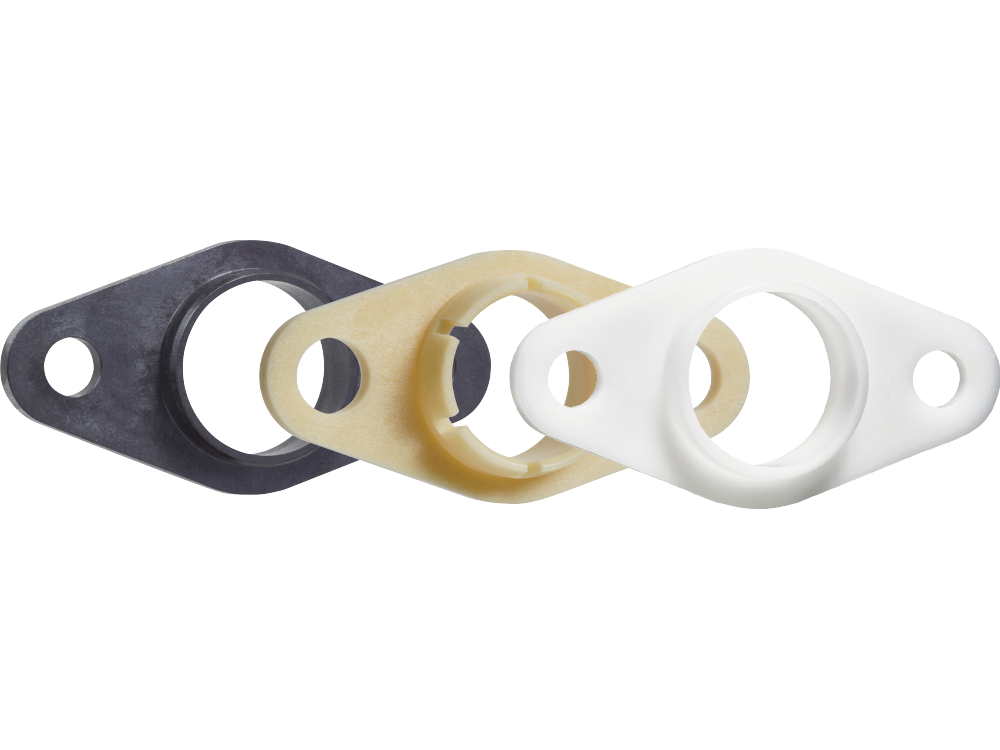
Two hole flange bearings
Flange bearings made of high performance plastics are particularly suitable where no precisely toleranced mounting holes are feasible.
igubal® self-aligning bearings
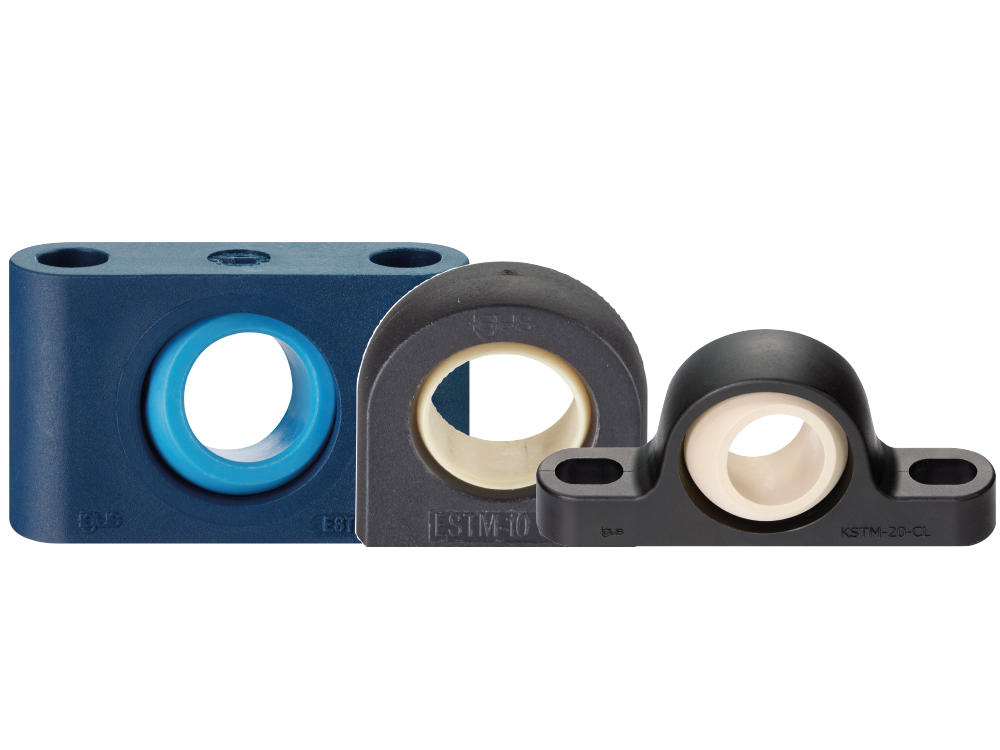
Pillow block bearings
Up to 40% more cost-effective and 80% lighter than comparable metal solutions – Completely maintenance-free.
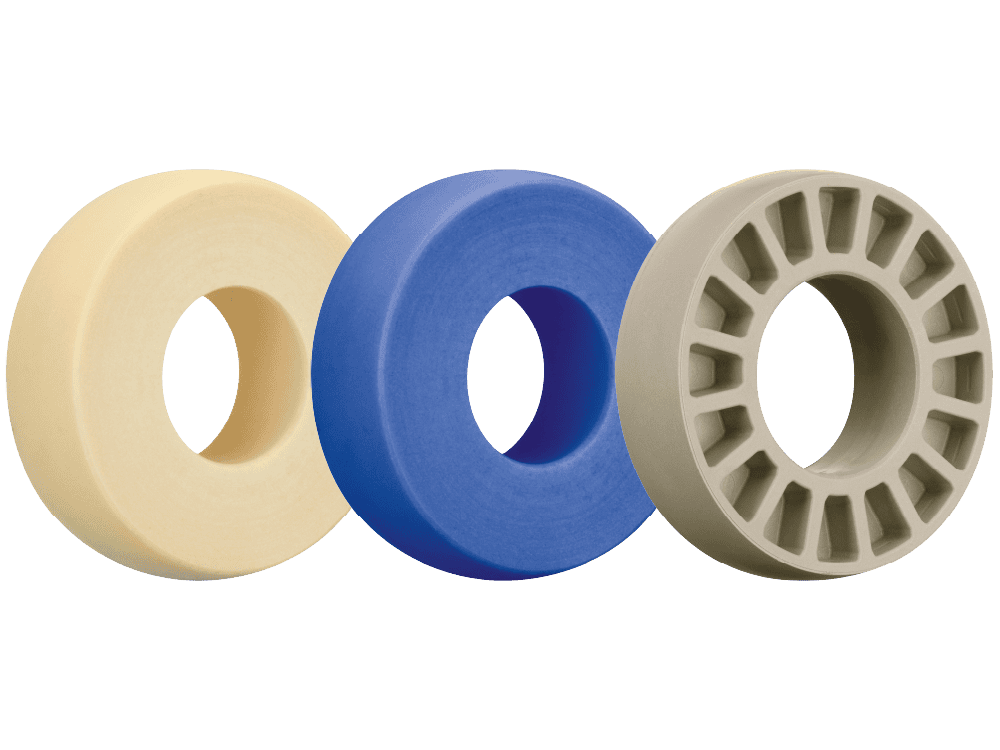
Spherical bearing inserts
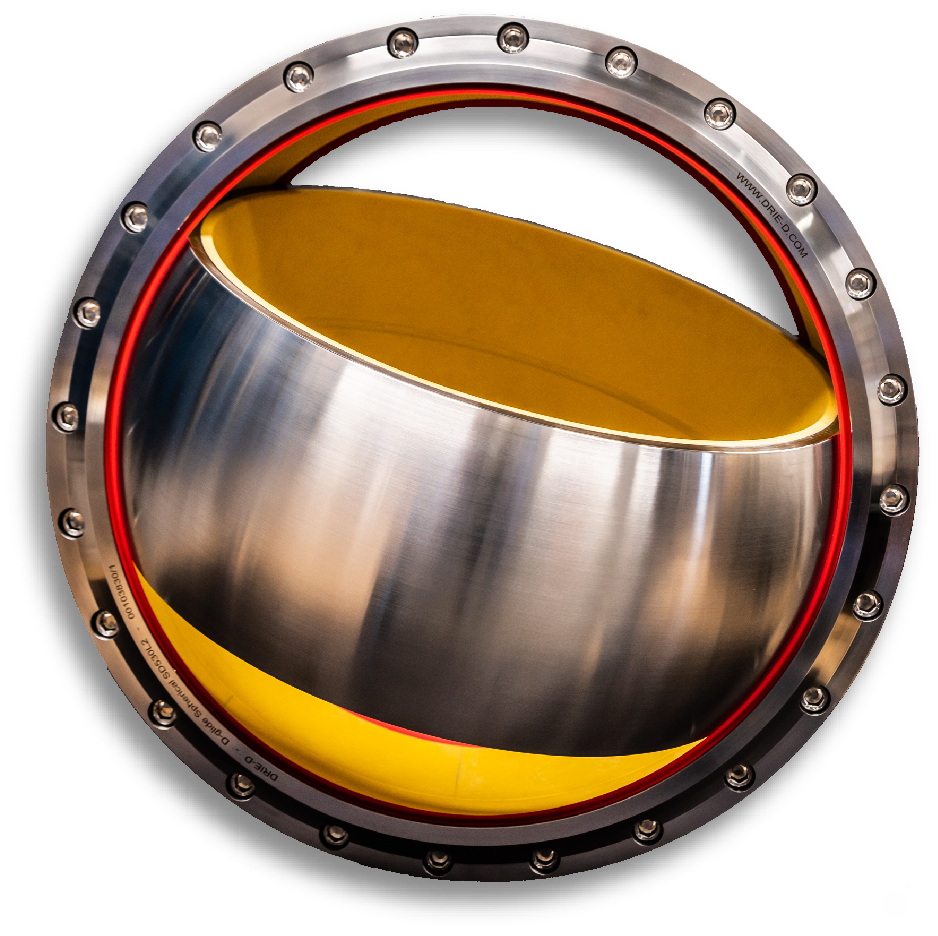
Allows for lubrication-free mounting of shafts with misalignment compensation in flange and pillow block housings.
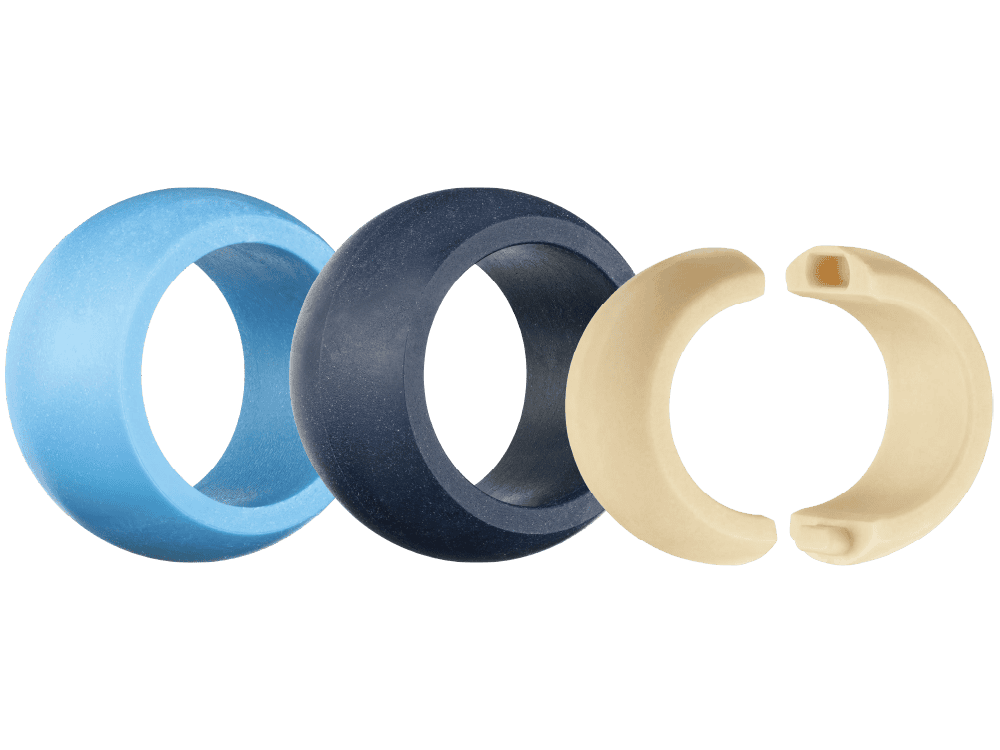
Spherical balls
Compensate for misalignment and enable low-friction shaft rotation.
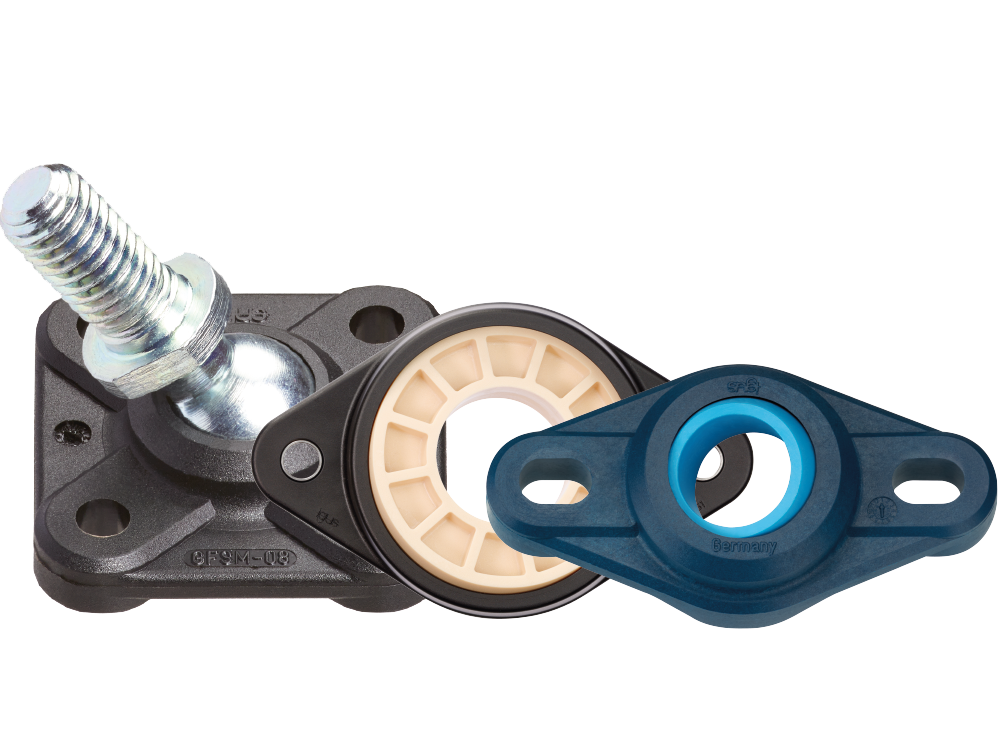
Flange bearings
Self-aligning flange bearings, suitable for reliable deployment in demanding environments.
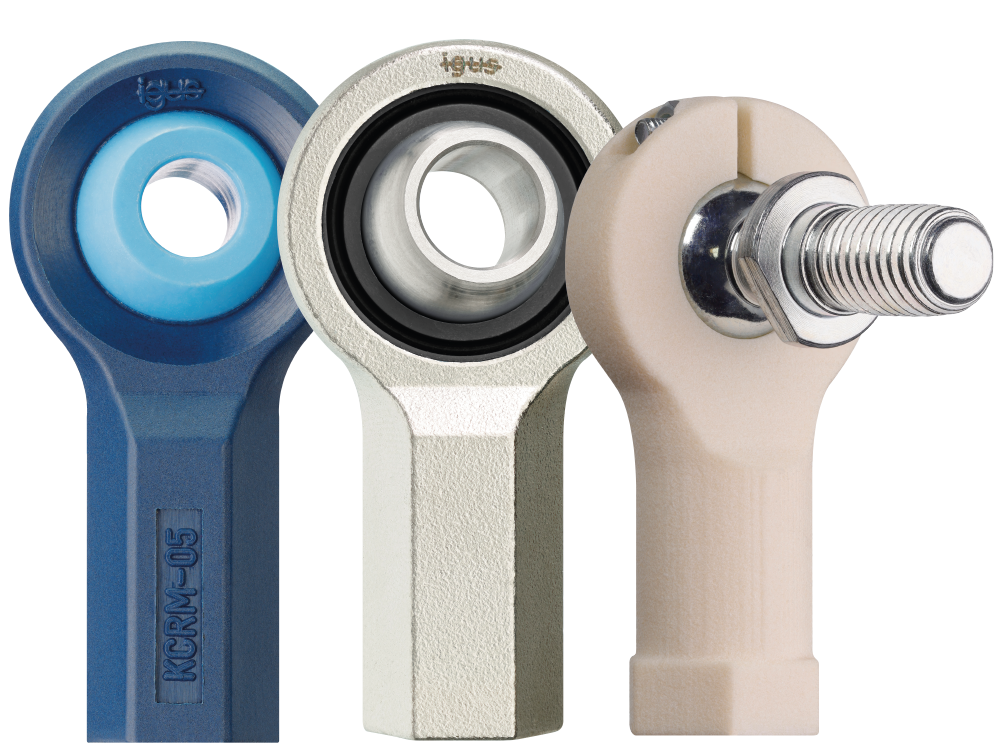
Rod ends
Rod ends facilitate rotating, oscillating and linear movements of the shaft – suitable for virtually every installation requirement.
xiros® ball bearings
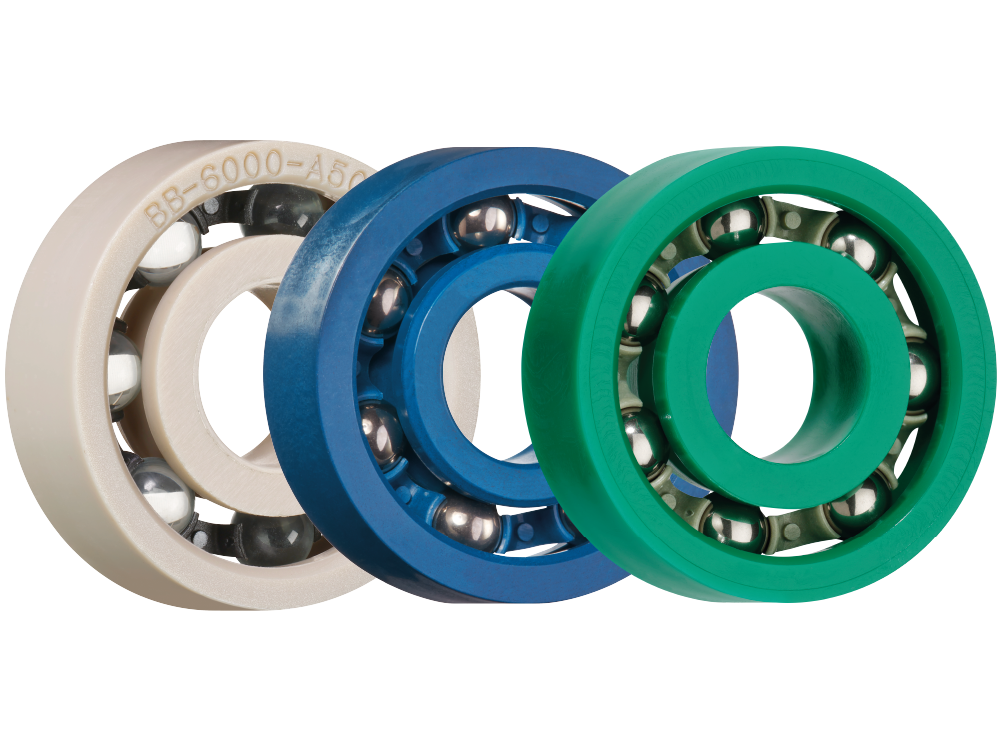
Radial ball bearings
Radial deep groove ball bearings consisting of high-performance polymers, with stainless steel or glass balls moving in the cage.
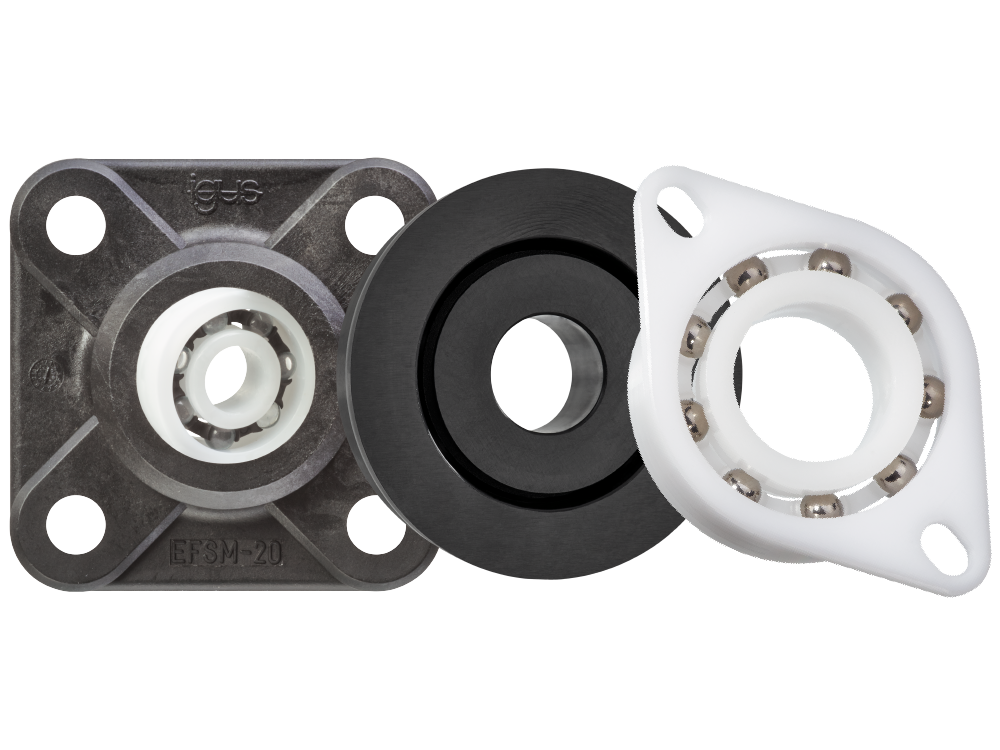
Flange ball bearings
Lubrication-free flange ball bearings enables 1:1 replacement of metallic flange ball bearings due to identical dimensions.
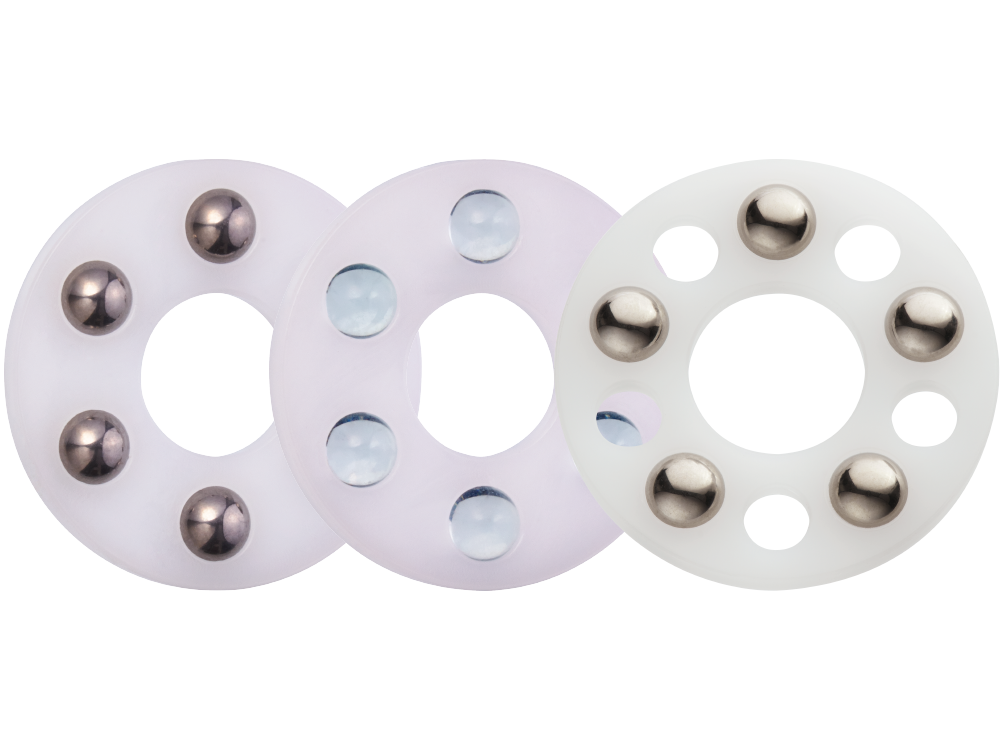
Axial ball bearings
Axial thrust bearings with stainless steel or glass balls.
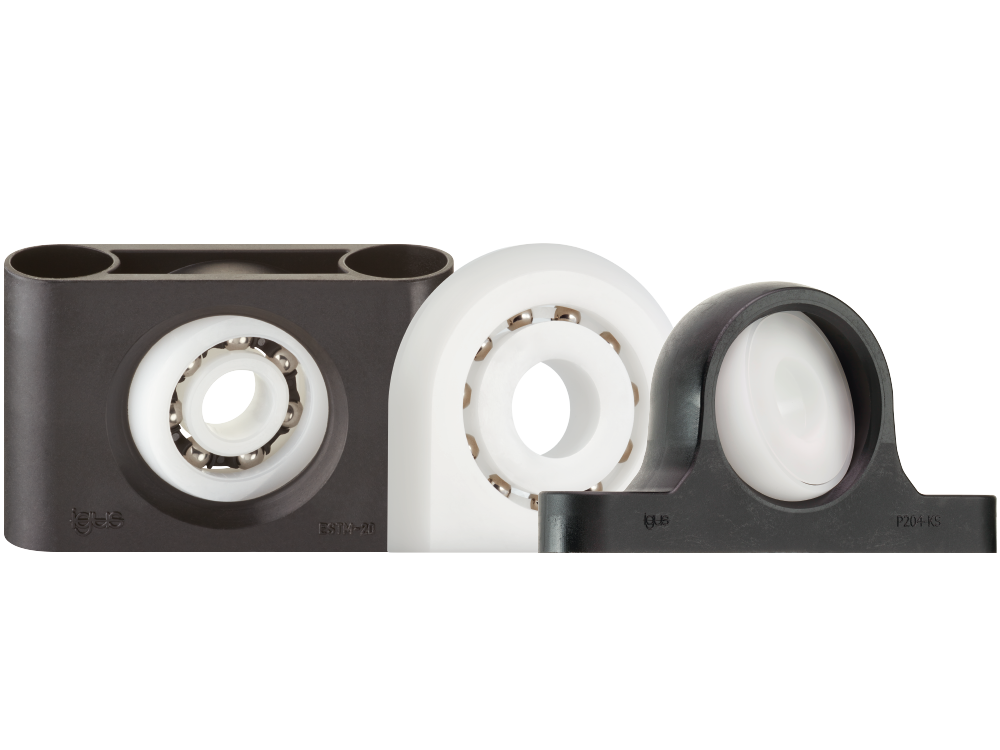
Pillow block ball bearings
Polymer pedestal-type ball bearings, up to 60% lighter and 40% more cost-effective than metal bearings.
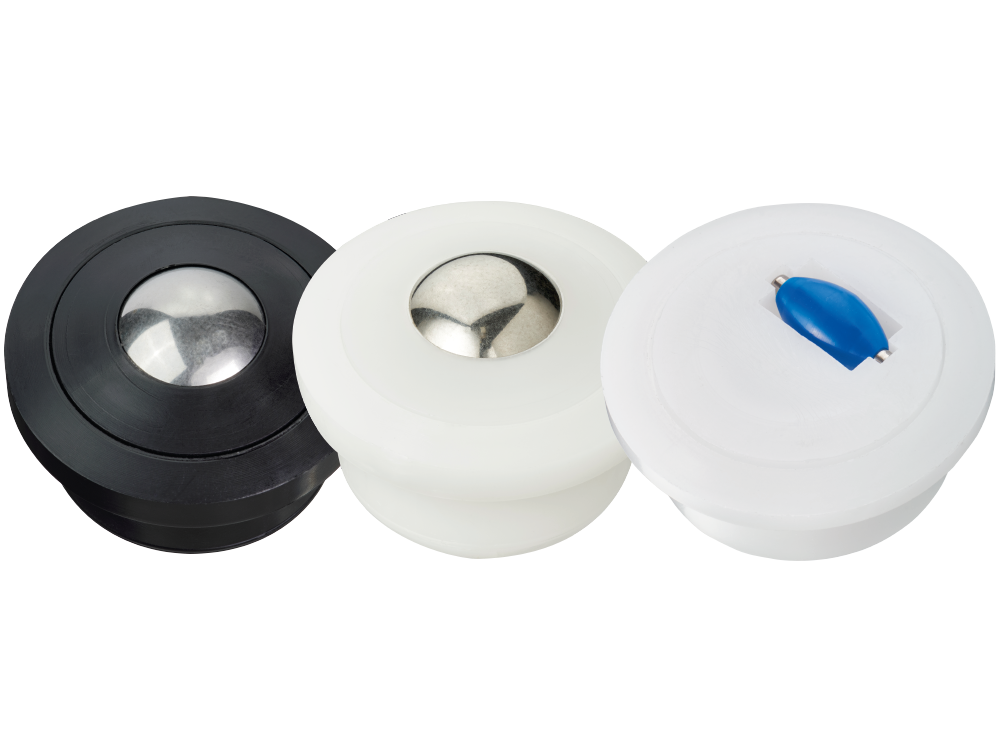
Ball transfer units
Move heavy and sensitive loads easily: whether in conveyor technology, the food and glass industry or even in the sports sector.
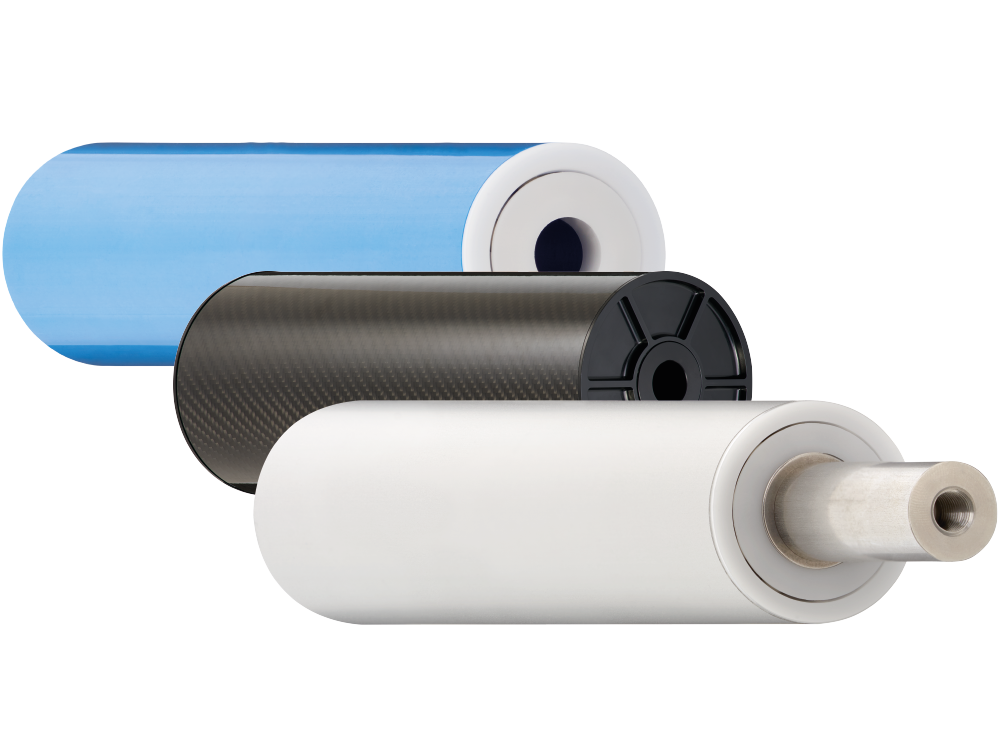
Guide rollers
Guide rollers/film guide rollers made of aluminium, stainless steel, carbon or PVC plastic: the alternative for steel guide rollers for low loads.
iglidur® PRT slewing ring bearings

Slewing rings
Maintenance-free sliding elements made of tribologically optimised iglidur materials and rings made of lightweight anodised aluminium or stainless steel.

Toothed slewing rings
Very light and stable slewing ring bearings with external as well as internal splines.
DRIE-D Bearing solutions
Frequently Asked Questions About Composite Bearings
Below are short answers to common questions about composite bearings, including materials, benefits, applications, and maintenance.
Composite bearings are maintenance-free bearings made from engineered materials that combine strength, low friction, and long service life for industrial applications.
Composite bearings offer low maintenance, corrosion resistance, reduced friction, and reliable performance in demanding environments.
Yes, many composite bearings are self-lubricating, which means they can run without external grease or oil in many applications.
Composite bearings are used in construction equipment, marine systems, food processing, transport, and general industrial machinery.
Composite bearings perform well in wet, dirty, and corrosive environments thanks to their resistance to moisture, chemicals, and contamination.
Most composite bearings are designed for low maintenance or maintenance-free operation, helping reduce downtime and service costs.
Composite bearings are commonly made from reinforced polymers, resin-based materials, fibres, and solid lubricant layers.
Composite bearings can be a better choice than metal bearings when low maintenance, corrosion resistance, and dry running performance are important.
Yes, composite bearings can handle high loads when the correct bearing type and material are selected for the application.
Composite bearings can support cleaner operation because many designs reduce or eliminate the need for grease and oil lubrication.
Still searching? Let us help!
Glidelager, foringer, plastforing, sfæriske lager, kulelager, svingkrans, thruster, kulelagre